MacBook chargers play a constant role in daily routines—powering work sessions, study hours, creative projects, and travel days. When a charger stops working earlier than expected, the inconvenience feels immediate. People often assume the issue is sudden, but early failure usually builds over time due to hidden stress, environmental factors, and small habits that compound. Understanding why chargers fail helps you protect your own equipment and choose charging tools that support long-term reliability. Many users turn to versatile options such as the Anker 735 Charger (Nano II 65W) because they prefer a dependable charger that works across notebooks, tablets, and phones without overselling any feature. Before exploring alternatives, it’s essential to understand why early failure happens in the first place.
The Hidden Factors That Lead to Early Charger Failure
Constant Strain on Cables and Connectors Weakens the Charger
Daily charging habits apply small but continuous stress to cables. People often bend cables near the connector, pull them from awkward angles, or wrap them tightly when storing them. These habits weaken the internal wiring gradually. Over time, the cable may lose its ability to transfer power efficiently or maintain a strong connection with the device. When internal strands begin to break, heat may build more easily, and the charger becomes more sensitive to movement. Even when users handle the charger carefully, normal wear can accumulate. This is a common reason why some chargers stop working earlier—especially models used with larger devices such as a macbook charger, which draws more power and puts greater load on cables.
Power Surges and Fluctuating Outlets Put Stress on the Charger
Not all outlets deliver consistent voltage. Fluctuations may occur in apartments, older homes, public spaces, and shared office environments. When the charger receives inconsistent power, its internal components must work harder to stabilize the current before it reaches the device. This constant regulation creates additional heat and stress. Small surges may not be noticeable, but over months or years, they can weaken the charger’s circuitry. Chargers that include modern power management systems often handle unstable input more effectively. For example, the Anker 735 Charger (Nano II 65W) uses refined internal design to help maintain consistent output even when the environment varies. This type of engineering supports longevity without overselling the product.
High Usage and Continuous Fast Charging Increase Internal Workload
MacBook users often run demanding tasks—video editing, coding, design work, or streaming—while charging. This increases the device’s power draw, causing the charger to work at higher output for longer periods. When this pattern repeats daily, internal components face more heat cycles. Over time, this may shorten the lifespan of certain chargers. Even without heavy work, leaving the charger plugged in around the clock can keep components energized more often than necessary. Newer chargers manage these transitions more efficiently, balancing power delivery across multiple devices or reducing output when not needed. This helps minimize unnecessary heating cycles and supports durability.
See also: Tech Made Simple: The Easiest Software for Seniors to Use with Confidence
How Modern Design and Smart Habits Extend Charger Lifespan
Keeping the Charger in a Cool, Ventilated Area Helps It Last Longer
Heat is one of the main reasons electronic components age prematurely. When chargers operate in tight spaces—behind beds, under pillows, inside drawers, or pressed against fabric—they cannot release heat effectively. Good airflow helps the charger maintain a stable temperature. Using clean, open outlets and keeping the charger off soft surfaces can noticeably improve performance. Modern chargers with compact form factors, like the Anker 735 Charger (Nano II 65W), benefit even more from proper ventilation because they are designed for high efficiency. Giving the charger room to breathe ensures that internal components do not face unnecessary heat stress during charging.
Using Quality Cables Reduces Resistance and Prevents Overheating
Cables and chargers work together. A low-quality or aging cable can create irregular resistance, which forces the charger to work harder. This leads to increased heat and faster wear. Choosing high-quality cables ensures smoother current flow, especially for laptops that require significant power delivery. Users often replace their MacBook cables more frequently than their chargers, but both parts influence each other’s performance. By pairing a reliable charger with a dependable cable, you create a setup that stays stable and reduces strain on both ends.
Choosing a Versatile Charger Reduces Overuse of a Single Power Adapter
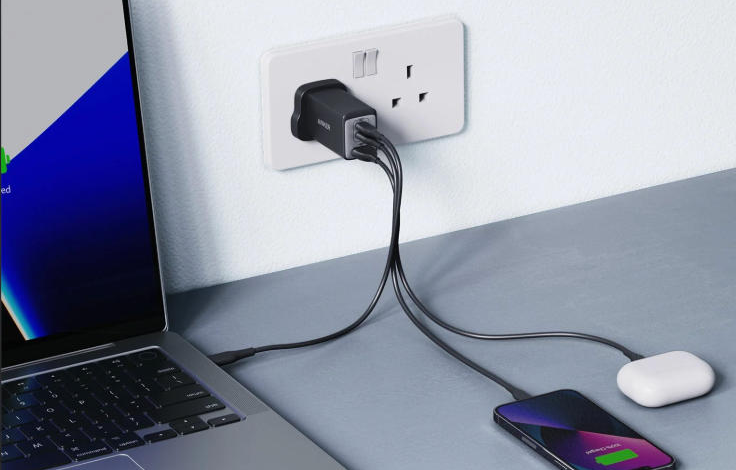
Using one charger for everything may seem convenient, but it sometimes causes faster wear when the charger handles extreme loads continuously. A versatile charger with multiple ports helps distribute power more efficiently. When a single device does not need maximum output, the load can shift across ports or decrease entirely. A multi-device charger like the Anker 735 Charger (Nano II 65W) supports this balanced approach by powering a notebook, tablet, and phone at the same time with controlled output. This design helps reduce unnecessary stress on the charger during everyday use. People appreciate this versatility because it supports their entire device setup without overselling any capability.
Conclusion
MacBook chargers often fail early due to heat buildup, mechanical stress on cables, inconsistent power from outlets, and continuous high-load usage. While some wear is natural, simple adjustments—such as improving ventilation, using better cables, and avoiding overloaded power strips—extend charger lifespan significantly. Choosing a charger designed for efficient, stable power delivery also makes a difference. A compact and capable option like the Anker 735 Charger (Nano II 65W) fits smoothly into modern routines by powering notebooks, tablets, and phones with steady output and thoughtful engineering. When you understand why chargers fail and adopt smarter charging habits, you protect your devices, reduce interruptions, and maintain a more reliable workspace.