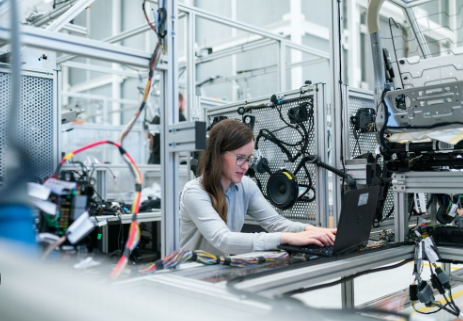
Automation is transforming the landscape of manufacturing, fundamentally altering production processes. Smart factories leverage advanced technologies for enhanced efficiency and adaptability. This shift raises critical questions about workforce dynamics and the future of employment in the sector. As industries integrate automation, understanding the implications for skill development and collaboration becomes vital. The ongoing evolution prompts a closer examination of what lies ahead in manufacturing’s automated future.
The Rise of Smart Factories
As industries increasingly embrace technological advancements, the concept of smart factories has emerged as a pivotal element in the evolution of manufacturing processes.
Central to this transformation are smart sensors and data analytics, which enable real-time monitoring and analysis of operations. By harnessing these technologies, manufacturers can optimize efficiency, reduce waste, and enhance decision-making, paving the way for greater autonomy and innovation in production environments.
Key Technologies Driving Automation
The integration of smart technologies within manufacturing has set the stage for a range of innovations that drive automation.
Key technologies include robotic process automation, which enhances efficiency by streamlining repetitive tasks, and machine learning, enabling systems to adapt and optimize operations through data analysis.
These advancements foster a more flexible production environment, empowering manufacturers to respond swiftly to market demands and improve overall productivity.
Read Also: How Automation Is Changing the Manufacturing Industry
Impacts on Workforce and Employment
How does the rise of automation in manufacturing influence the workforce and employment landscape?
The integration of automation leads to significant job displacement, particularly in routine tasks.
However, it also creates opportunities for skill development, requiring workers to adapt to new technologies.
This shift demands a focus on retraining and upskilling, ensuring the workforce remains competitive in an evolving industry landscape driven by technological advancements.
Future Trends in Manufacturing Automation
Job displacement resulting from automation has prompted a reevaluation of workforce dynamics, setting the stage for future trends in manufacturing automation.
Collaborative robots are increasingly integrated into production lines, enhancing human-robot collaboration.
Additionally, predictive maintenance technologies are being adopted to minimize downtime and optimize efficiency.
These advancements signify a shift towards more adaptive, responsive manufacturing environments that prioritize flexibility and productivity.
Conclusion
As automation continues to reshape the manufacturing landscape, the adage “adapt or perish” underscores the urgency for industries to embrace technological advancements. Smart factories equipped with cutting-edge technologies are not merely enhancing efficiency but also redefining workforce dynamics. While challenges such as job displacement exist, the potential for skill development and collaboration between humans and machines presents a pathway to a more innovative and resilient manufacturing sector. Continuous improvement and retraining will be vital for sustaining competitiveness in this evolving environment.