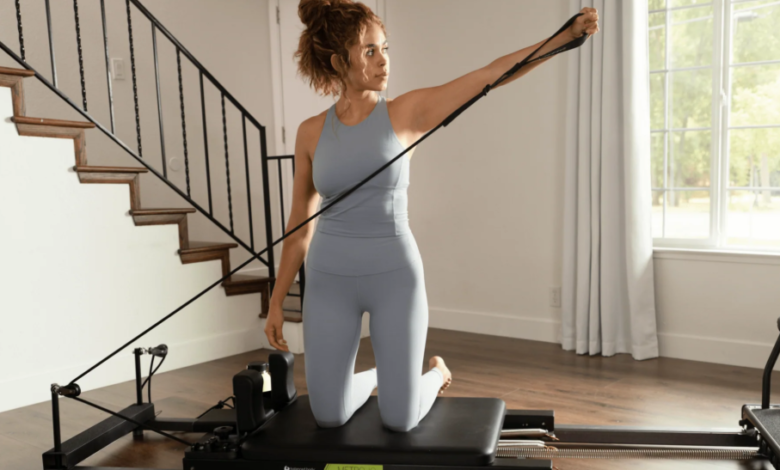
Pilates, a form of exercise that emphasises controlled movements and core strength, has undergone numerous transformations since its inception. Among these innovations, jumpboard pilates has emerged as a dynamic and invigorating component within the Pilates landscape that brings a new level of energy and variety to workouts.
The Emergence of Jumpboard Pilates
Within the evolution of modern Pilates practice, the integration of different apparatus has played a significant role in diversifying routines and increasing accessibility. The jumpboard is a padded board that attaches to the end of a Pilates reformer, enabling a broad range of exercises that blend cardiovascular work with the traditional Pilates focus on form and alignment.
Revitalising Your Routine
At its core, jumpboard Pilates presents an opportunity to revitalise standard workout routines. Its incorporation into a Pilates session allows for a greater emphasis on leg strength, enhanced cardio intensity, and a refreshing change of pace from the often slow and methodical nature of conventional Pilates exercises.
See also: Affordable Fitted Bathrooms in Telford: Style and Quality Within Reach
The Benefits of Integrating Jumpboard
Jumpboard Pilates stands out by providing a low-impact workout that can be geared towards improving cardiovascular endurance without placing undue stress on the joints. This addresses a common critique faced by traditional Pilates – the lack of obvious cardiovascular components within the practice. By bringing in the jumpboard, practitioners can enjoy an elevated heart rate and increased metabolic demand alongside the much-acclaimed benefits of Pilates such as improved flexibility, stronger core muscles, and better posture.
Furthermore, the jumpboard adds a playful and fun dimension to workouts. It invites individuals to experience Pilates exercises from a different perspective, one that includes an element of levity without undermining the sophistication and technique that Pilates is known for.
Adapting Pilates for Diverse Needs
Another significant advantage of jumpboard Pilates is its adaptability to cater to various skill levels and physical conditions. Since the exercises can be modified in intensity and range of motion, they are suitable for everyone from beginners to advanced athletes, including those recovering from injuries.
For individuals seeking to complement their existing exercise regimen with a form of cross-training that provides both strength training and cardiorespiratory advantages, jumpboard Pilates emerges as an optimal choice. Its inclusion can stimulate different muscle groups, promoting a well-rounded approach to fitness.
Designing a Jumpboard Pilates Session
Designing a jumpboard Pilates session involves a mix of creativity and an understanding of traditional Pilates principles. Instructors typically start with a warm-up using the reformer, proceeding to integrate jumpboard exercises that focus on legs, glutes, and core strengthening. Routines often conclude with a cool-down involving stretching and deep relaxation to ensure a balanced workout.
The sequencing and flow of the session are crucial. The jumpboard lends itself to creating combinations that not only challenge muscular endurance but also coordination and rhythm. It is an approach that contrasts yet complements the meticulous and slower-paced Pilates exercises.
Jumpboard Pilates and Full-Body Engagement
One of the most striking features of jumpboard Pilates is its encouragement of full-body engagement. While the lower body is propelling movement against the jumpboard, the core must remain activated to maintain stability, and the upper body often engages through isometric contractions or complementary movements with straps and handles. This convergence of effort results in a comprehensive workout that streamlines the body’s entire kinetic chain.
Additionally, integrating the use of a jumpboard can improve proprioception and body awareness. Regular practice helps hone the ability to maintain control and precision during dynamic movements—a keystone of the Pilates philosophy.
Conclusion
Jumpboard Pilates has successfully provided a fresh alternative to traditional Pilates sessions, answering the modern fitness enthusiast’s call for diversification in exercise routines. It holds a unique position by blending cardiovascular workout elements with classical Pilates, all set within a low-impact framework.
As people continue to search for ways to stay active, engaged, and motivated in their fitness pursuits, jumpboard Pilates promises a revitalised routine that is both challenging and rewarding. Transitioning to this dynamic form of exercise could mark the beginning of an enriched relationship with Pilates and a deeper understanding of one’s physical capabilities.
In conclusion, incorporating a jumpboard into a Pilates regimen is more than just an addition to a workout; it’s a transformative experience that reshapes one’s approach to exercise. For those looking to jumpstart their Pilates practice with vigour and holistic engagement, exploring the possibilities of jumpboard Pilates may indeed be the step forward in the evolution of their personal fitness journey.