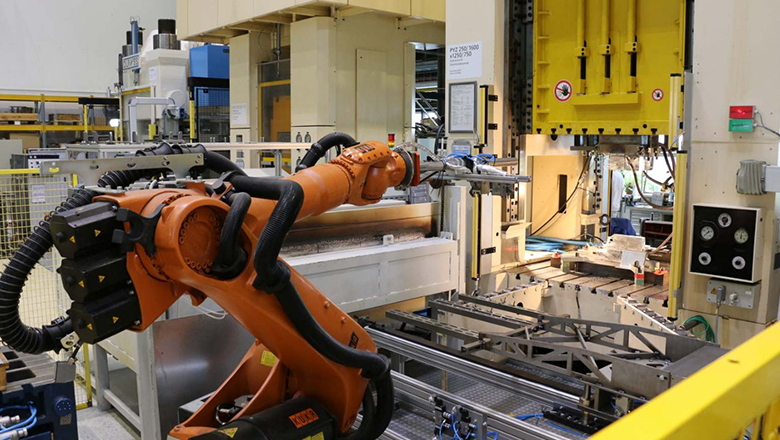
In today’s rapidly evolving manufacturing landscape, precision, efficiency, and adaptability are essential. Industries such as aerospace, automotive, medical devices, and electronics demand components that meet strict tolerances, deliver reliable performance, and integrate seamlessly into complex assemblies. CNC machining has become a cornerstone of modern manufacturing, providing the accuracy, repeatability, and flexibility required to meet these demands. Among the specialized processes within CNC machining, custom cnc milling has gained prominence for its ability to produce tailored, high-precision components suitable for a wide range of industrial applications.
Understanding CNC Milling
CNC milling is a computer-controlled machining process in which rotary cutting tools remove material from a stationary workpiece to achieve the desired shape and specifications. Unlike manual milling, CNC milling relies on pre-programmed instructions, allowing for highly accurate cuts and complex geometries.
Modern multi-axis CNC milling machines enable the production of intricate components in a single setup, improving efficiency and reducing the risk of errors. This capability is particularly valuable in industries where even minor deviations in component dimensions can impact performance, safety, or functionality.
The Advantages of Custom CNC Milling
Custom cnc milling provides manufacturers with the flexibility to produce unique, application-specific components. Unlike standard machining processes that are limited to predefined shapes, custom milling allows for tailored solutions that address specific design challenges.
Precision and Accuracy
One of the most significant advantages of custom cnc milling is the ability to achieve tight tolerances and high consistency across production batches. This level of precision ensures that components fit perfectly within assemblies and perform reliably under demanding conditions.
Complex Geometries
Custom cnc milling enables the creation of complex shapes, angled surfaces, and intricate features that would be difficult or impossible custom cnc milling to achieve through traditional machining. This is especially beneficial for industries such as aerospace and medical devices, where component complexity directly impacts functionality.
Cost Efficiency
While custom processes may seem costly at first glance, the efficiency of CNC machines reduces labor requirements, minimizes material waste, and shortens production time. Over the long term, custom cnc milling can lower overall production costs while maintaining high-quality standards.
Applications Across Key Industries
Custom cnc milling serves a diverse range of industries, each with unique requirements for precision, durability, and performance.
Aerospace
In aerospace manufacturing, components must meet stringent tolerances while maintaining a high strength-to-weight ratio. Custom cnc milling is used to produce engine parts, structural fittings, and other critical components that require intricate designs. Multi-axis milling allows for complex geometries, reducing assembly complexity and improving overall aircraft performance.
Automotive
The automotive sector benefits from custom cnc milling in the production of engine components, transmission housings, suspension elements, and specialized parts for electric vehicles. Precision machining ensures proper fit, reliable performance, and durability under high stress and temperature conditions. The ability to produce tailored components also supports innovation in vehicle design and performance optimization.
Medical Devices
Medical equipment requires components with high precision, smooth finishes, and biocompatibility. Custom cnc milling produces implants, surgical instruments, and diagnostic components that meet strict regulatory standards. This process ensures reliable performance in critical applications, supporting advancements in healthcare technology.
See also: Revolutionizing Sports Training with Innovative Technology
Industrial Machinery and Electronics
In industrial machinery and electronics, custom cnc milling creates gears, housings, connectors, and enclosures with exact specifications. Precision components improve system efficiency, reduce wear, and enhance equipment longevity. Tailored solutions allow manufacturers to address specific operational requirements, improving overall performance and reliability.
Quality Control in Custom CNC Milling
Quality assurance is a cornerstone of custom cnc milling. Components often perform critical functions where failure is not an option, making rigorous inspection procedures essential. Manufacturers employ in-process monitoring, final dimensional verification, and advanced measurement tools such as coordinate measuring machines (CMMs).
Experienced engineers and quality professionals oversee production to ensure every component meets design specifications. This approach minimizes scrap, enhances yield, and ensures consistent performance across all batches, providing confidence to clients in industries where precision is critical.
Prototyping and Product Development
Custom cnc milling plays a pivotal role in prototyping and product development. Rapid prototyping allows engineers to evaluate form, fit, and function before committing to full-scale production. CNC-milled prototypes closely mimic the final production parts, providing realistic feedback for design improvements and functional testing.
This capability accelerates product development, reduces costs, and supports innovation. Industries such as aerospace, automotive, and medical devices particularly benefit from the ability to test and refine designs quickly without compromising quality.
Sustainability in CNC Machining
Sustainable manufacturing practices are increasingly important in modern industry. Custom cnc milling contributes to sustainability by minimizing material waste through precise cutting, optimizing tool paths, and improving energy efficiency. Many manufacturers also recycle scrap materials, further reducing environmental impact.
By integrating sustainable practices into production, manufacturers can achieve both economic and environmental benefits while maintaining high-quality standards.
Skilled Professionals Behind CNC Machining
Despite the automation offered by CNC machinery, skilled professionals remain essential. Machinists, engineers, and programmers ensure optimal tool selection, efficient programming, and effective problem-solving. Knowledge of material properties, tolerances, and machine capabilities is critical for producing high-quality components consistently.
Continuous training allows teams to stay up-to-date with evolving technologies, multi-axis machines, and advanced software, ensuring that manufacturers can fully leverage the benefits of custom cnc milling.
Building Long-Term Partnerships
Successful CNC machining relies on collaboration, reliability, and communication. Providers that consistently deliver high-quality components, adapt to client needs, and meet deadlines often become long-term strategic partners.
Custom cnc milling service providers typically offer design consultation, process optimization, and flexible production schedules. These partnerships enhance productivity, reduce costs, and improve overall manufacturing outcomes, benefiting both clients and service providers.
The Future of Custom CNC Milling
The future of custom cnc milling is closely tied to technological advancements, including multi-axis machining, automation, real-time monitoring, and smart manufacturing. These innovations enhance precision, increase efficiency, and allow the production of increasingly complex components.
As industries demand high-performance, reliable, and tailored components, custom cnc milling will continue to be a critical resource. Manufacturers investing in advanced machinery, skilled personnel, and rigorous quality control will maintain a competitive edge in precision machining solutions.
Custom cnc milling provides the precision, flexibility, and reliability necessary to address modern industrial challenges, support innovation, and drive efficiency in manufacturing operations.