Knee ligament injuries, particularly to the anterior cruciate ligament (ACL) and posterior cruciate ligament (PCL), are common among athletes and active individuals. Proper surgical repair of these ligaments requires specialized knee ligament surgery tools to ensure precise graft placement, stability, and long-term joint function. These instruments play a crucial role in arthroscopic and open procedures, improving surgical accuracy and patient recovery outcomes.
By using advanced knee ligament surgery tools, orthopedic surgeons can perform complex reconstructions efficiently while minimizing tissue trauma and postoperative complications.
What Are Knee Ligament Surgery Tools?
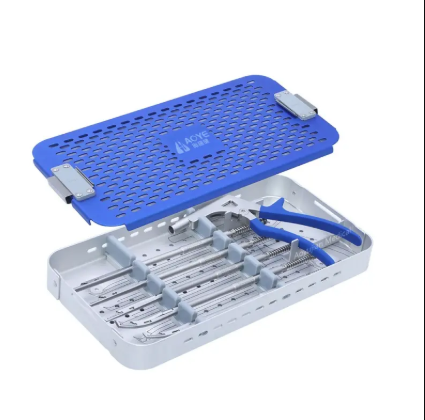
Knee ligament surgery tools are a set of medical instruments specifically designed for the reconstruction or repair of ACL, PCL, and other knee ligaments. Common components include:
- Arthroscopic instruments (scissors, graspers, probes)
- Drill guides and reamers for tunnel creation
- Graft fixation devices such as screws, buttons, or staples
- Soft tissue retractors and elevators
- Measuring devices for accurate tunnel alignment
These tools are typically made from surgical-grade stainless steel or titanium to ensure precision, durability, and sterility during procedures.
Advantages of Specialized Knee Ligament Surgery Tools
Precise Graft Placement
Tools such as drill guides and reamers allow accurate femoral and tibial tunnel positioning, ensuring correct ligament tension and alignment.
Minimally Invasive Surgery
Most knee ligament surgeries are performed arthroscopically, reducing soft tissue damage, minimizing scarring, and promoting faster recovery.
Efficient Surgical Workflow
Having all necessary instruments in one knee ligament surgery tools organized set streamlines the procedure, reducing operating time and potential errors.
Versatility
Knee ligament surgery tools accommodate different graft types (autograft, allograft, synthetic) and fixation methods for personalized surgical planning.
See also: Innovations in Adhesive Technologies for Modern Manufacturing
Safety and Durability
High-quality materials ensure instruments are resistant to corrosion, maintain precision, and withstand repeated sterilization cycles.
Applications in Orthopedic Surgery
ACL Reconstruction
ACL reconstruction restores knee stability following ligament rupture. Surgery involves precise tunnel placement and graft fixation, which is facilitated by specialized instruments.
PCL Reconstruction
PCL injuries require careful surgical intervention due to their deep anatomical location. Knee ligament surgery tools help create accurate tunnels and securely fix grafts.
Multi-Ligament Repair
Complex knee injuries involving multiple ligaments require versatile instruments for sequential or simultaneous reconstruction.
Revision Surgeries
In cases of previous failed surgeries, these tools enable accurate graft placement and fixation during revision procedures.
Technical Considerations
Material Quality
Instruments are commonly made from surgical-grade stainless steel or titanium, ensuring strength, biocompatibility, and resistance to corrosion.
Ergonomic Design
Handles and tips are designed for precise control, ease of handling, and comfort during extended surgical procedures.
Compatibility
Tools must support various graft types and fixation methods to allow flexibility in surgical technique.
Sterilization and Maintenance
Instruments should withstand repeated sterilization without compromising precision, functionality, or surface integrity.
Benefits of Knee Ligament Surgery Tools
- Enhanced Precision: Supports accurate graft placement and alignment
- Minimally Invasive: Reduces tissue trauma and accelerates recovery
- Streamlined Workflow: All necessary instruments available in one set
- Versatile: Suitable for different grafts and fixation techniques
- Durable and Safe: High-quality materials for repeated surgical use
Conclusion
Knee ligament surgery tools are indispensable for successful ACL and PCL repairs, providing precision, efficiency, and safety in modern orthopedic procedures. These instruments enable surgeons to perform minimally invasive reconstructions, improve patient outcomes, and reduce surgical risks.
Investing in high-quality knee ligament surgery tools ensures reliable performance in both primary and revision surgeries, supporting long-term knee stability and functional recovery. Proper care, sterilization, and maintenance maximize the longevity and effectiveness of the instruments.
Frequently Asked Questions
What are knee ligament surgery tools used for?
They are used for reconstructing or repairing ACL, PCL, and other knee ligaments, ensuring accurate graft placement and stabilization.
Can these tools be used in minimally invasive procedures?
Yes, they are designed for arthroscopic surgery, which reduces tissue trauma and recovery time.
Do they support different graft types?
Yes, the tools accommodate autografts, allografts, and synthetic grafts with compatible fixation devices.
How should the instruments be maintained?
Instruments should be cleaned, sterilized, and inspected regularly to maintain precision and safety.
Are these tools suitable for revision surgeries?
Absolutely. They allow accurate graft placement and fixation even in complex or failed reconstruction cases.